














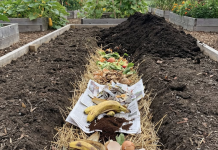









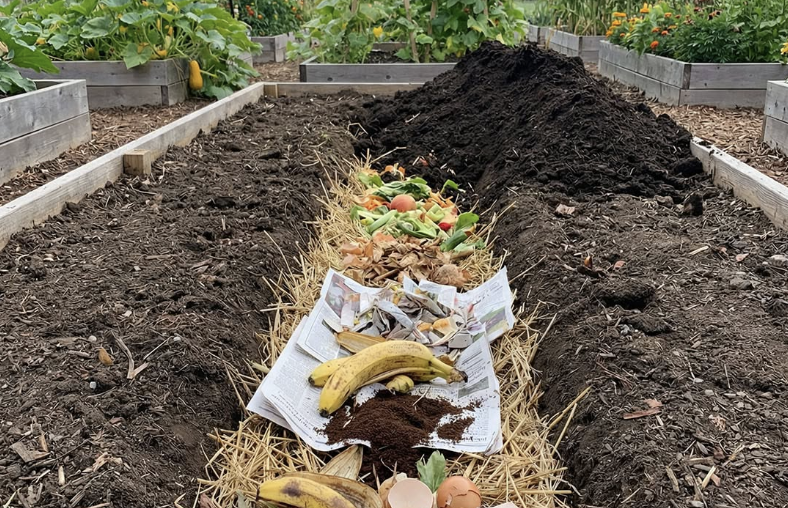
Want to skip the compost bin entirely and feed your soil directly where plants will grow? Trench composting is one of the most straightforward and lowest-effort fertility methods a vegetable gardener can use. You basically dig a trench about 12 inches deep down the center of a raised bed or garden row, layer in organic kitchen and garden waste, cover it with soil, and let it break down in place over several weeks. The decomposing material feeds soil microbes and worms directly in the root zone, which is exactly where you want that activity happening.
Use a layering approach. Straw goes in first as a carbon base, then kitchen scraps like banana peels, eggshells, vegetable trimmings, and coffee grounds, then torn newspaper for additional carbon, then a covering of finished compost or garden soil to close it out. That alternating pattern of carbon-rich browns and nitrogen-rich greens is the same principle behind a traditional compost pile, just done underground. Eggshells are worth adding generously here. They break down slowly and release calcium, which helps prevent blossom end rot in tomatoes and peppers grown in the same bed the following season.
Dig your trench in one third of the bed this season, plant on top of last season’s trench, and leave the third you planted last year fallow or in a cover crop. Rotate each year and the entire bed gradually improves. One thing to avoid: do not add meat, dairy, or cooked food scraps to an in-ground trench. They attract rodents and break down anaerobically, which creates odor and can introduce pathogens. Stick to raw fruit and vegetable waste, coffee grounds, crushed eggshells, straw, and plain paper products.